Seamless vs Sewn-Seam Activewear: What You're Actually Trading Off
Quick Answer: Seamless activewear is knit directly to the shape of the garment on a circular knitting machine, while sewn-seam activewear is cut from flat fabric panels and stitched together — and that construction difference is the source of every real tradeoff between them. Seamless reduces chafing and eliminates visible panty lines but runs warmer (less airflow through the denser knit) and shows more body definition since there’s no panel structure to smooth or shape. Sewn-seam construction allows targeted compression and structural support through panel placement but introduces friction points and visible seam lines that seamless avoids entirely.
You’ve probably owned both without thinking much about why one feels different from the other beyond “softer” or “more supportive.” The difference isn’t really about softness — it’s about how the garment is physically built, and that construction choice quietly determines nearly everything else about how it performs, feels, and looks on your body.
What’s the Actual Construction Difference Between Seamless and Sewn-Seam?
Seamless activewear is knit to shape on a specialized circular knitting machine that produces the entire garment — or very close to the entire garment — as one continuous tube of fabric, following the body’s contours as it’s knit rather than being assembled afterward. This is the same broad technology behind seamless socks and increasingly seamless underwear; the machine varies stitch density and tension in different zones to create fit and light shaping without ever cutting or sewing a seam.
Sewn-seam (cut-and-sew) construction starts with flat fabric — knit or woven, produced in large rolls — that’s then cut into individual pattern pieces and stitched together along defined seam lines, the way most clothing throughout history has been made. Leggings built this way typically have seams at the inseam, side, and sometimes a back yoke or center-back seam, each one a place where two fabric edges are joined.
This distinction explains almost every downstream difference between the two. Seamless garments have zero panel boundaries, so there’s no structural interruption in the fabric’s stretch or surface — it moves and stretches as one continuous piece. Sewn-seam garments gain the ability to combine different fabrics or stretch levels in different zones (a firmer panel at the waist, a more breathable panel at the back of the knee) because each piece is cut and sewn independently before assembly — a level of engineering control seamless knitting can’t fully replicate in a single continuous piece.
Why Does Seamless Actually Reduce Chafing and Panty Lines?
Chafing happens at friction points — anywhere two surfaces (skin and fabric, or fabric and fabric) rub repeatedly during movement, and a sewn seam is a physical ridge, even a well-finished flatlock one, that creates exactly that kind of friction point against skin during repetitive motion like running or cycling. Inseam chafing on sewn-construction leggings is a well-known complaint for exactly this reason — the inner-thigh seam rubs with every stride over enough miles.
Seamless construction removes that ridge entirely in the areas it covers, which is why seamless leggings and shorts are disproportionately popular among runners and cyclists logging serious mileage — there’s simply no seam there to rub. The same logic applies to visible panty lines: a seamless garment doesn’t have the structural seam edges that create a visible ridge under fabric, so it lies smoother against whatever’s worn underneath (or lies smoother directly against skin, since some seamless pieces are designed to be worn without additional underwear for exactly this reason).
This benefit isn’t absolute, though. Most “seamless” garments still have at least one seam — commonly at the crotch gusset or waistband closure, since knitting a fully closed tube with zero seams anywhere is extremely difficult even with seamless technology. The marketing claim “seamless” generally means “minimal seams in the friction-prone zones,” not “literally zero seams anywhere,” which is worth knowing so you’re not surprised to find a small seam somewhere on an otherwise seamless piece.

Myth vs Fact — What People Get Wrong About Seamless Activewear
Myth: Seamless activewear is always more supportive because it’s “second-skin” tight. Fact: Tightness and support aren’t the same thing. Seamless knitting can vary tension to create some shaping, but it can’t build in the same targeted compression panels or structural bands that sewn construction achieves by combining different fabric weights in different zones. For high-impact support (running sports bras, heavy compression leggings), sewn-seam construction generally outperforms seamless.
Myth: Seamless fabric is always cooler and more breathable because it’s thinner. Fact: Often the opposite. Seamless knitting tends to use a denser stitch structure to achieve shaping and opacity without seams, and that density can reduce airflow compared to a sewn garment that can incorporate genuinely breathable mesh or perforated panels in high-heat zones like the underarm or lower back — something seamless knitting struggles to replicate as effectively.
Myth: Seamless is a newer, strictly “better” technology than sewn-seam. Fact: Seamless and sewn-seam are different tools for different jobs, not an upgrade path. Seamless excels at chafe-reduction and smooth visual lines; sewn-seam excels at structural engineering and mixed-fabric zoning. Many premium activewear lines use both deliberately in the same collection for different products.
Myth: All seamless pieces show more body definition than sewn pieces. Fact: This is generally true but depends heavily on knit density and stitch pattern — a seamless piece knit with a jacquard or textured pattern can obscure body definition more than a plain, smooth sewn-seam piece in a thin, clingy fabric. Construction method is a strong predictor, not an absolute rule.
How Do You Actually Decide Which One Suits Your Use Case?
Start with what you’re doing in the garment and for how long. For running, cycling, or any high-repetition, high-mileage activity, seamless construction’s chafe reduction is a genuine, measurable comfort advantage that compounds over distance — the difference between a comfortable 10K and a raw inner thigh at mile eight. For weightlifting, HIIT, or anything needing targeted compression and structural hold (particularly sports bras and high-impact leggings), sewn-seam construction’s ability to engineer different support levels into different zones generally wins.
Consider your climate and typical workout intensity. If you run hot or work out in warm conditions, the reduced airflow of denser seamless knits is a real tradeoff worth weighing against the chafe-reduction benefit — a sewn-seam piece with genuine mesh ventilation panels may keep you more comfortable overall even with a seam or two to manage. In cooler conditions or shorter, lower-sweat activities (yoga, walking, everyday wear), seamless’s smoothness advantage matters more and its warmth tradeoff matters less.
Think honestly about body-definition comfort. Seamless’s close, uninterrupted fit is precisely what makes it flattering to some and uncomfortably revealing to others — there’s no panel structure to soften a silhouette. If you prefer a garment that shapes and smooths more than it clings, a well-constructed sewn-seam piece with strategic paneling will generally feel more forgiving, independent of size.
Finally, look at your actual chafing history. If you’ve had inseam or waistband chafing issues before on sewn-construction pieces, that’s a strong, personal signal that seamless is worth the tradeoff on warmth and support for you specifically — chafing is common enough that it’s a legitimate primary purchase criterion, not a minor detail.
FAQ: Seamless vs Sewn-Seam Questions, Answered
Is seamless activewear more expensive to produce than sewn-seam?
Generally yes — seamless knitting machines are specialized and slower per garment than cutting and sewing flat fabric at scale, and that production cost is often reflected in retail price for genuinely seamless pieces.
Can seamless leggings offer real squat-proof opacity?
Yes, if the knit density is high enough — but because there’s no panel-mixing option, the entire garment shares one fabric density, so a seamless piece optimized for opacity may run warmer than a sewn piece that can use denser fabric only where needed.
Do seamless sets run smaller or fit differently than sized sewn-seam pieces?
Seamless garments often use stretch and knit tension for fit rather than traditional cut-pattern sizing, so sizing can feel different between brands even at the “same” listed size — checking a specific brand’s size chart matters more with seamless pieces than with standard sewn sizing.
Which is better for sensitive skin?
Seamless generally has the edge for friction-related skin sensitivity since there are fewer seam ridges to irritate, though fabric fiber content (synthetic vs. natural blends) matters at least as much as construction method for skin reactions.
TL;DR:
- Seamless is knit to shape as one continuous piece; sewn-seam is cut from flat fabric and stitched together — that difference drives every tradeoff
- Seamless wins on chafe reduction and eliminating visible panty lines, but tends to run warmer and shows more body definition
- Sewn-seam wins on targeted compression, structural support, and zone-specific breathability through paneling
- Match the construction to your use case: seamless for high-mileage chafe-prone activities, sewn-seam for heavy support or hot-climate ventilation needs
Neither construction is objectively better — the right choice is whichever tradeoff matches what your body actually does in the garment.
See It in Motion
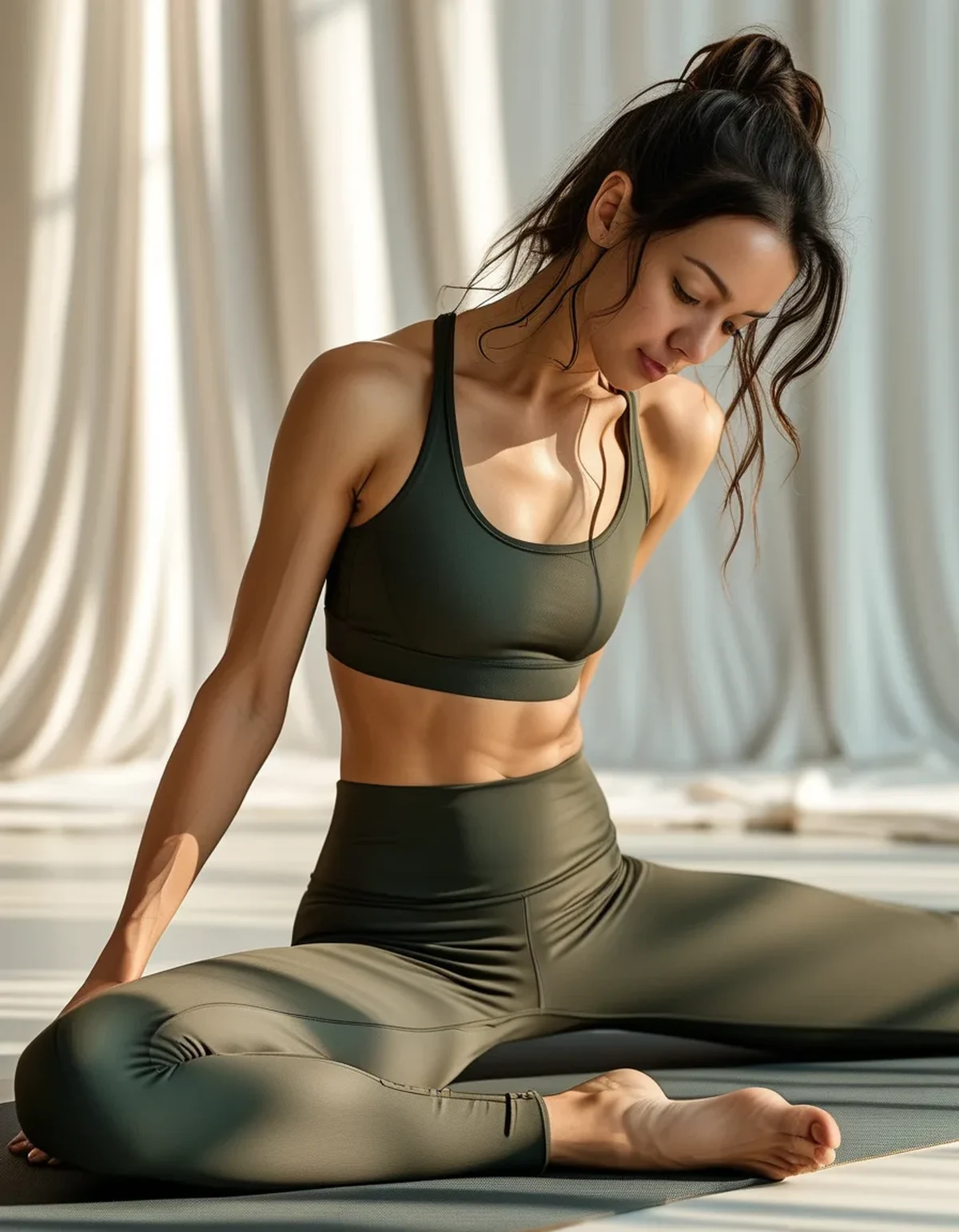
Seen here: High Waist Embossed Yoga Leggings with Side Pockets — shop it on bubblelime.com
Keep Reading
This article is for general informational and styling purposes only. Fit, sizing, and product availability may vary.