Why a Matching Set Stops Matching the Moment You Add a Third Piece
Quick Answer: A matching set works because the eye reads one continuous colour and texture from shoulder to ankle. Adding a third piece interrupts that line - it divides the set into a visible top half and bottom half, and the moment the halves are seen separately, small differences in tone, sheen, and wear become obvious. The fix is to layer in a way that either continues the line or deliberately frames it, rather than cutting it in half.
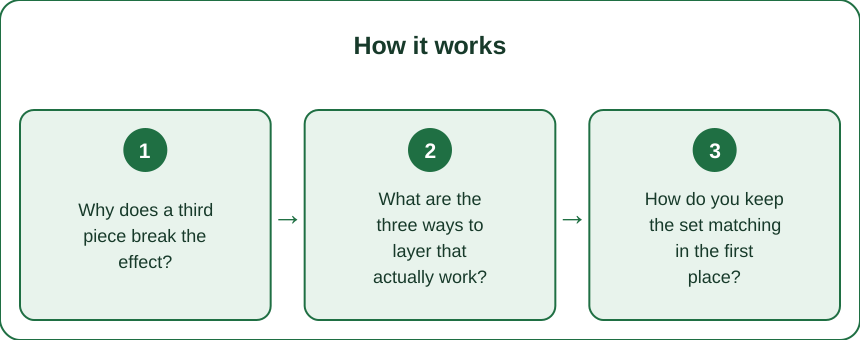
Here is why the third piece breaks it, and the three ways to layer that do not.

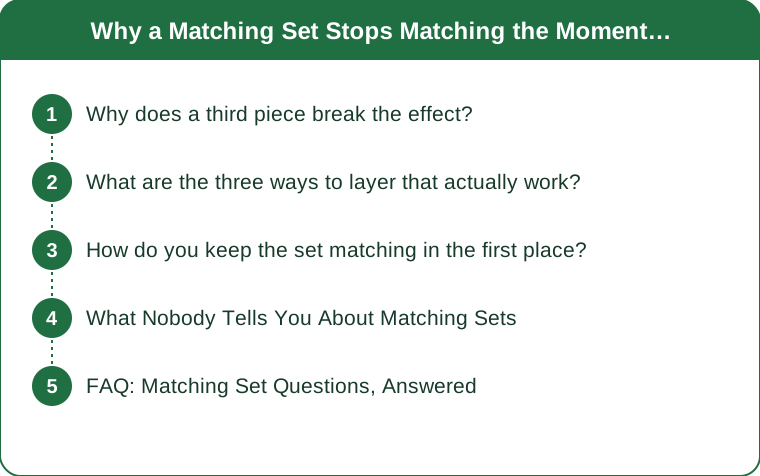
Why does a third piece break the effect?
Because the set’s whole visual mechanism is continuity, and a layer interrupts it.
The eye reads a matching set as a single garment. Uninterrupted colour and texture from top to bottom creates one vertical line, which is the lengthening, cohesive effect that makes sets appealing in the first place.
A contrasting layer cuts that line horizontally. Whatever the layer’s hem sits at becomes a visual division, and now you are seeing a top and a bottom rather than a set - which invites comparison between them.
And comparison is where sets fail. Two pieces from the same set frequently differ slightly - the top and bottom experience different wear, different washing frequency, and different amounts of stretch, so their colour and sheen drift apart over months. Worn as a continuous line, this is invisible. Worn as two compared halves, it is not.
Fabric sheen makes it worse. Seamless knits have directional sheen that varies with how the fabric stretches over the body. The top stretched across shoulders and the leggings stretched across hips reflect light differently, and a dividing layer draws attention to exactly that difference.
Which explains the specific complaint: the set looks perfect alone, mismatched with a jacket. Nothing changed except that you can now see the two pieces as separate objects.
What are the three ways to layer that actually work?
Each solves the problem differently, and they suit different situations.
One: continue the line with a long open layer. A long open cardigan, duster, or open jacket that runs past the hip creates vertical lines on either side rather than a horizontal cut. The set stays continuous down the centre, and the layer frames it.
Two: commit fully to a contrast. If the layer is going to divide the outfit, make it an obvious deliberate choice - a distinctly different colour, texture, or weight. The failure mode is a near-match, which reads as a failed attempt at matching rather than as a choice. Deliberate contrast never looks like a mistake; near-match always does.
Three: layer underneath rather than over. A long-sleeve base under the set’s top keeps the set itself uninterrupted while adding warmth. This is the most useful autumn solution and the least used.
What does not work: a cropped layer in a similar tone. It cuts the line at the shortest point, sits in the zone where colour drift is most visible, and reads as an attempt to match that missed.
And a mid-length jacket in the same colour family is the hardest thing to pull off. Same-family colours in different fabrics rarely read as intentional, because the eye expects them to match and they do not quite. A completely different colour is significantly easier.

How do you keep the set matching in the first place?
Care practice, and it is worth more than any styling fix.
Wash both pieces together, always. Different wash counts produce different degrees of fading and pilling, and that divergence is permanent. This is the single most effective habit for keeping a set looking like a set.
Wash cold, inside out, and air dry. Heat causes colour loss and elastane degradation, and tumble drying is the fastest route to two pieces that no longer match.
Skip fabric softener. It coats fibres unevenly, affecting how the fabric reflects light - which is exactly the sheen difference that makes a set look mismatched.
Rotate wear evenly. People wear the leggings far more often than the top, so the leggings fade and pill first. If you want the set to stay a set, the pieces need similar mileage.
Store them together and out of direct light. Light exposure fades fabric over months, and a top stored on a hanger in a bright room while the leggings live in a drawer will diverge noticeably in a season.
And accept the divergence eventually. All sets eventually stop matching. When they do, they become two good separate pieces rather than a failed set - and pairing each with a genuine contrast is what extends their useful life.
What Nobody Tells You About Matching Sets
The two pieces frequently come from different fabric rolls, so a brand-new set can have a subtle tonal difference straight out of the packaging. Check them together in daylight before removing tags - shop lighting hides this reliably.
Sheen difference is more noticeable than colour difference. Two pieces at slightly different colours can look fine; two at different sheens look wrong immediately, because the eye reads reflectance faster than hue.
Fit changes the match. A top and leggings stretched to different degrees over your body reflect light differently even in identical fabric, which is why the same set can look better or worse depending on how it fits that week.
Gym lighting is unusually cruel to sets. Strong overhead lighting maximises the sheen difference between horizontal and vertical surfaces, which is precisely why sets that look flawless at home can look off in a studio mirror.
A third piece from the same brand is not automatically safer. Brands change dye lots between seasons, and last season’s colour rarely matches this season’s version of the same name.
And the one that surprises people: the most reliable way to wear a matching set with a layer is to stop trying to extend the match and start using contrast deliberately. A set with an obviously different jacket looks considered. A set with an almost-matching jacket looks like an accident - and the difference between the two is entirely in whether the choice reads as intentional.
As layering season arrives, this becomes the practical question rather than a theoretical one - the set that carried summer alone now needs a third piece most days, and choosing contrast over near-match is what keeps it working.
FAQ: Matching Set Questions, Answered
Why does my set look mismatched with a jacket on?
Because the jacket divides the set into a visible top and bottom, and the halves get compared. Small differences in tone and sheen that are invisible in a continuous line become obvious once separated.
What layer works best over a matching set?
A long open layer that runs past the hip, which creates vertical lines rather than a horizontal cut. Alternatively, layer underneath the set’s top instead of over it.
Should my jacket match the set’s colour?
Generally no. A near-match reads as a failed attempt; a deliberate contrast reads as a choice. Same-colour-family in a different fabric is the hardest thing to pull off.
Why do the top and leggings fade differently?
Usually because they get washed and worn different numbers of times. Washing them together and rotating wear evenly is the most effective fix.
Why does my set look fine at home and off in the studio mirror?
Strong overhead lighting maximises the sheen difference between the fabric stretched horizontally and vertically. It is a lighting effect, not a change in the garment.
Can I buy a matching third piece later?
Rarely successfully. Dye lots change between seasons, so last season’s colour usually will not match this season’s version of the same name.
TL;DR:
- A set works because the eye reads one continuous line - a third piece cuts it horizontally and turns one garment into two compared halves.
- Once compared, small tone and sheen differences from uneven wear and washing become obvious.
- Three layers that work: a long open layer past the hip, a deliberate full contrast, or a base layer underneath the set’s top.
- Near-match is the failure mode. Deliberate contrast reads as a choice; almost-matching reads as a mistake.
- Wash both pieces together, cold, inside out, air dried, no softener - divergent wash counts cause permanent divergence.
- Rotate wear evenly - most people wear the leggings far more than the top, and it shows within a season.
- Sheen differences read faster than colour differences, which is why gym lighting is so unflattering to sets.
When a set finally stops matching, it becomes two good separates. Pair each with a real contrast.
See It in Motion
Seen here: High Waist Embossed Yoga Leggings with Side Pockets — shop it on bubblelime.com
Keep Reading
This article is for general informational and styling purposes only. Fit, sizing, and product availability may vary.