Why the Top and Bottom of a Seamless Set Stop Matching
Quick Answer: The two pieces of a set experience completely different loads. Leggings are stretched far more, contact more surfaces, absorb more sweat at higher concentration, and are washed more often in many people’s rotation. So the bottom fades, pills, and loses recovery faster — and the top, which barely changes, is what makes the mismatch obvious.
The frustrating thing about a set is that it is only a set as long as both halves match. One piece aging faster than the other does not give you two usable garments. It gives you neither.
And the two pieces are not comparable garments. They happen to be made of the same fabric in the same dye lot, which is what makes people expect them to age the same way.

Why leggings take four times the abuse
Run through what each piece actually goes through.
Stretch. A legging is under near-continuous tension across the seat and thighs, and it is stretched dramatically during squatting, sitting, and lunging. A top is loose over the torso by comparison, with real stretch only across the bust and shoulders. Repeated stretch is the primary driver of elastane fatigue, so the bottom half is aging its fibers far faster.
Abrasion. Leggings contact chairs, car seats, benches, mats, gym equipment, and each other at the inner thigh. That inner-thigh contact alone is the origin of most seamless pilling. A top contacts a chair back and occasionally a bag strap. It is not close.
Sweat. Sweat pools differently across the body and its salt content is abrasive to fibers and hard on dyes. Leggings also sit against skin more continuously, with fewer air gaps.
Wash frequency. Many people re-wear a workout top once before washing and never do so with leggings. Over a year that is a meaningfully different number of cycles, and each cycle costs a little color and a little recovery.
Four compounding factors, all pointing the same direction. It would be surprising if they aged the same.
What the mismatch actually looks like
It shows up in three distinct ways, and it helps to know which one you have.
Color divergence. The most common. Leggings lose depth of color faster from abrasion, sweat, and washing. On dark shades the leggings go slightly gray or take on a dusty cast; on brights, the bottom loses saturation first. Standing separately, each looks fine. Together, the difference is unmistakable — which is exactly the problem with sets.
Texture divergence. Pilling on the inner thigh and seat gives the leggings a slightly fuzzy surface that scatters light differently. Even at identical color, a pilled surface reads as a different, duller shade than a smooth one.
Fit divergence. The leggings lose recovery and sit looser while the top still fits as new. The set stops looking coordinated because the silhouette no longer matches, not because the color changed.
Knowing which one you have determines whether anything can be done. Texture is partially recoverable with a fabric shaver. Color and fit divergence are not.
What Nobody Tells You About Buying and Caring for Sets
A few things that change the math significantly.
Buy a second bottom, not a second set. If you love a set and want it to last, the highest-value purchase is a duplicate of the leggings. Rotating two bottoms against one top roughly halves the wear rate on the piece that ages fastest, and it keeps them visually matched for far longer than buying two complete sets and rotating those.
Wash the pieces together, always. Same cycle, same detergent, same frequency, whether or not the top strictly needs it. Any difference in wash count becomes a difference in color. This one habit does more for set longevity than anything else.
Wash both inside out in a mesh bag, cold, air dry. Standard seamless care, but the point here is that it applies to both pieces equally. People routinely baby the top and throw the leggings in with everything else.
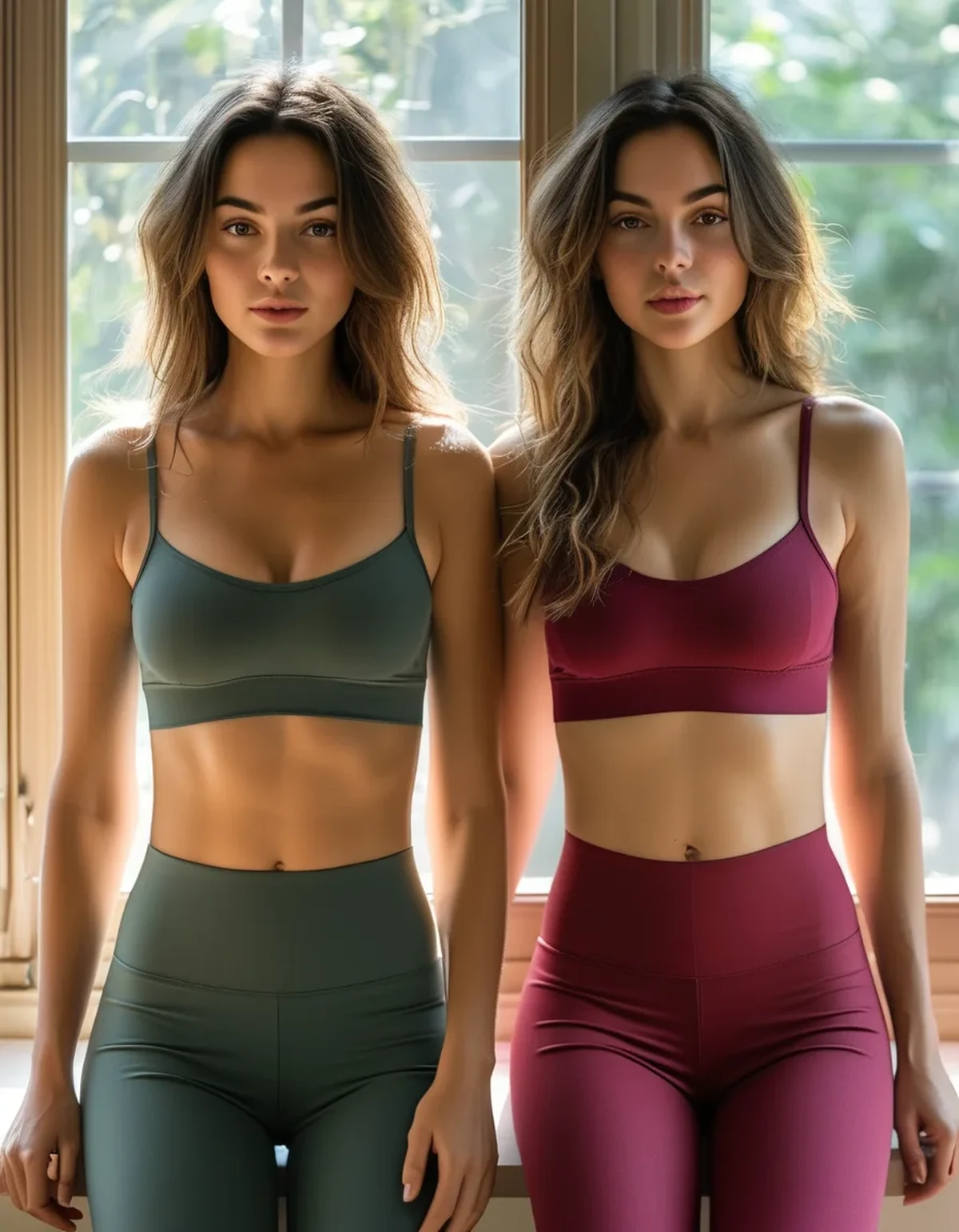
Consider color when you buy. Mid-tone and heathered colors hide divergence far better than deep saturated blacks, navies, or brights. A heathered gray or a muted sage set will look coordinated long after a true-black set has visibly split. If you want a set to last two seasons, this choice at purchase matters more than any care routine afterward.
Shave the pills early. A cheap fabric shaver used on the inner thighs every few weeks keeps the surface texture matched. It works far better as maintenance than as rescue — once pilling is dense, shaving leaves the surface visibly thinner.
When to accept it and split the set
At some point the set is over, and holding onto the pairing wastes two perfectly good garments.
A useful test: photograph both pieces together in daylight. Photos flatten the perceptual adjustment your eyes make in person and show color differences more honestly than a mirror does. If the difference is obvious in the photo, other people see it too.
Once they no longer match, treat them as separates rather than as a failed set. The top almost always still has substantial life left — it aged slowest, which is the whole point of this article — and it works with black leggings or under layers indefinitely.
The leggings, depending on condition, either continue as standalone leggings or get demoted. If they have lost recovery or gone sheer, they are done for training regardless of the set question.
Going forward, the practical lesson is that a matched set is a higher-maintenance purchase than two separates. You are committing to keeping two garments identical through very different levels of use, which is achievable but requires the duplicate bottom and the identical wash routine. Worth knowing before you buy the third one.
FAQ: Seamless Set Questions, Answered
Why do my leggings look faded but feel fine?
Color loss from surface abrasion and sweat happens well before structural failure. The fabric can be perfectly functional while looking noticeably older, which is precisely the situation that ruins a set.
Will washing the top more often make them match again?
No. Fading is not reversible, and washing the top more only ages it too — you would end up with two faded pieces, which arguably does match, at the cost of the good garment. Not a real solution.
Do darker sets really diverge faster?
Deep saturated colors show any loss of depth more readily, and black shows both fading and lint or pill fuzz most clearly of all. Heathered and mid-tone colors disguise the same amount of change far better.
TL;DR:
- Leggings endure vastly more stretch, abrasion, sweat, and wash cycles than the matching top — they age faster by construction of use, not quality.
- Divergence shows up as color, texture, or fit; only texture is partially recoverable with a fabric shaver.
- Buy a duplicate bottom rather than a second full set, and always wash both pieces on the same cycle.
- Heathered and mid-tone colors keep looking like a set far longer than deep blacks and brights.
If you have a set you love, the move is not better washing — it is a second pair of the leggings. That single purchase keeps the set matched roughly twice as long.
See It in Motion
Seen here: High Waist Yoga Leggings with Side Pockets — shop it on bubblelime.com
Keep Reading
This article is for general informational and styling purposes only. Fit, sizing, and product availability may vary.