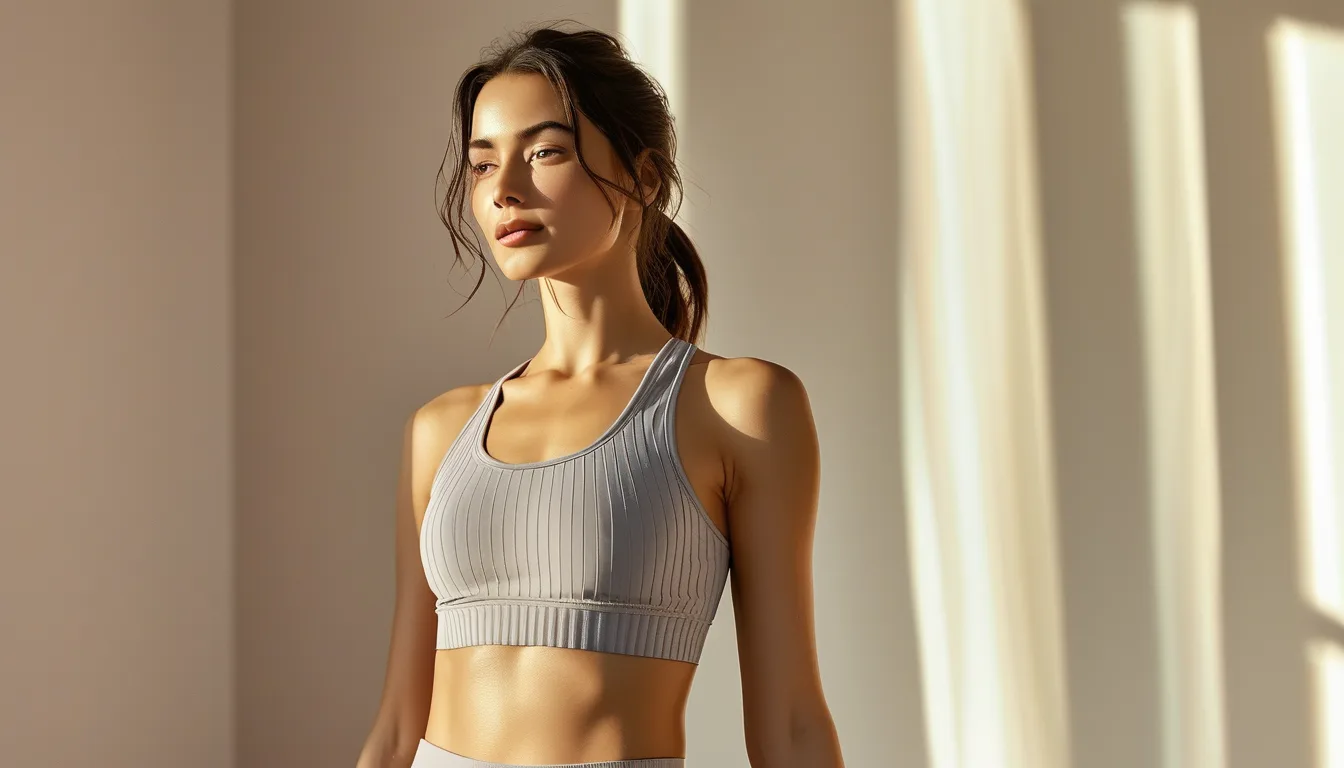
Why the Top and Bottom of a Seamless Set Stop Matching Once You Add a Layer
Quick Answer: A seamless set matches because both pieces were dyed in the same lot and are seen under the same light. Once you layer, the top is partially covered and lit differently from the bottom, and the two pieces age at different rates because the top gets washed more and takes more friction. Autumn layering makes an existing mismatch visible rather than creating a new one.
The set looked perfect all summer. You put a jacket over the top for a cool morning, unzip it in the studio, and suddenly the top and the leggings are visibly not the same color.

Why layering exposes a mismatch that was already there
Because you have changed how much of each piece is visible and under what light.
A full set seen in one light reads as one color, and your eye normalizes small differences across a large continuous field. Cover most of the top with a jacket and you are now comparing a small patch of the top against a large area of leggings, with a hard edge between them.
Small color differences are far more visible at an edge than across a gradient. That is a basic property of how we see color, and it means a mismatch that was genuinely invisible in a full set becomes obvious the moment a jacket creates a boundary.
The light changes too. A jacket shadows the top, so the visible portion of the top is lit differently from the leggings. Two identical colors in different lighting read as different colors, and the eye attributes the difference to the garment rather than to the light.
Why the two pieces actually do age differently
There is a real mismatch underneath the perceptual one, and it grows over a season.
The top gets washed more often. For most people, the sports bra or top goes in after every session and the leggings sometimes get a second wear. Over a season that is a substantially different number of wash cycles, and each cycle costs a small amount of color.
The top takes more friction in different places. Straps, band, and the area under a pack or a seatbelt all abrade. Leggings abrade too, at the inner thigh and the seat, but the pattern is different.
Deodorant, sunscreen, and body oils concentrate on the top. These are chemically active on dye and elastane, and they do not affect leggings equally.
Sun exposure differs. In summer, a top worn under a bare shoulder or a crop gets direct UV while the leggings are usually in shade or covered. UV fades dye, and the difference over a summer of outdoor training is measurable.
So by late August a set that started identical genuinely is not, and layering is simply the thing that lets you see it.

What can you actually do about it?
Some of it is preventable and some of it is worth accepting.
Preventable:
- Wash both pieces together, every time, even if the leggings do not feel like they need it. This is the single most effective habit and it is annoying enough that almost nobody does it
- Cold water, inside out, no fabric softener. Softener coats the fibers and changes how they reflect light, which shows up as a sheen difference between a treated and less-treated piece
- Air dry both. Heat is the main driver of both fading and elastane degradation, and drying one piece while air-drying the other guarantees divergence
- Rinse out sweat promptly. Salt left in fabric accelerates both fading and fiber wear
Worth accepting:
- Some divergence over a year of real use is normal for any dyed textile, and seamless knits show it slightly more because the varying stitch density already reflects light unevenly
- Deep and bright colors diverge fastest; blacks, greys, and muted tones hide it best. If matching over time matters to you, the color choice at purchase does more than any care routine
What layering choices keep a set looking intentional?
You can dress around the problem rather than solving it.
Layer with something that creates a deliberate break. A contrasting jacket or an obviously different third piece reads as a styled outfit rather than a failed match. The eye stops looking for the top and bottom to agree once a third element is clearly doing something different.
Avoid the half-covered top. The worst case is a jacket that partially obscures the top, creating a small visible patch against a large field of leggings. Either fully open or fully closed reads better than half.
Choose a layer in the same family but a clearly different tone. A charcoal jacket over a black set is intentional. A slightly-off black jacket over a black set is the same problem again with an extra layer.
Use a third piece to unify. A jacket that picks up a colour from both the top and the leggings pulls the outfit together regardless of whether the two halves are precisely matched.
And the practical seasonal note: this is the exact moment of year when it starts to show, because you are pulling out jackets for cool mornings over sets that just went through a full summer of washing, sun, and sweat. A set that looked flawless in June is being seen under new conditions for the first time.
FAQ: Seamless Set Questions, Answered
Should I buy two of the top when I buy a set?
If you train frequently and the matching matters to you, it genuinely helps — you halve the wash cycles on each top and the divergence slows accordingly. Buy them at the same time so they come from the same dye lot, which is the other half of the equation.
Does washing them together really make a difference?
Yes, more than most people expect. Identical wash count, identical water temperature, identical detergent exposure and identical drying means the two pieces age along the same curve. Most set mismatch comes from the top simply having been washed twice as many times.
Why do some sets mismatch straight out of the packaging?
Dye lot variation. Even within one brand, pieces manufactured in different runs can differ slightly, and a top and legging bought separately or restocked at different times are more likely to differ than a set boxed together. Buying the pieces as a set, at the same time, is the best protection available.
TL;DR:
- Layering creates a hard edge and uneven lighting, which makes small existing color differences visible
- The top genuinely ages faster — more washes, more friction, more product contact, and more sun
- Wash both pieces together in cold water, air dry both, and skip fabric softener
- Style around it with a deliberately contrasting third layer rather than a nearly-matching one
The set did not stop matching when you put a jacket on. The jacket just showed you a divergence that a summer of unequal washing had already produced.
See It in Motion
Seen here: Super High Waist Embossed Yoga Leggings with Inner Pocket — shop it on bubblelime.com
Keep Reading
This article is for general informational and styling purposes only. Fit, sizing, and product availability may vary.